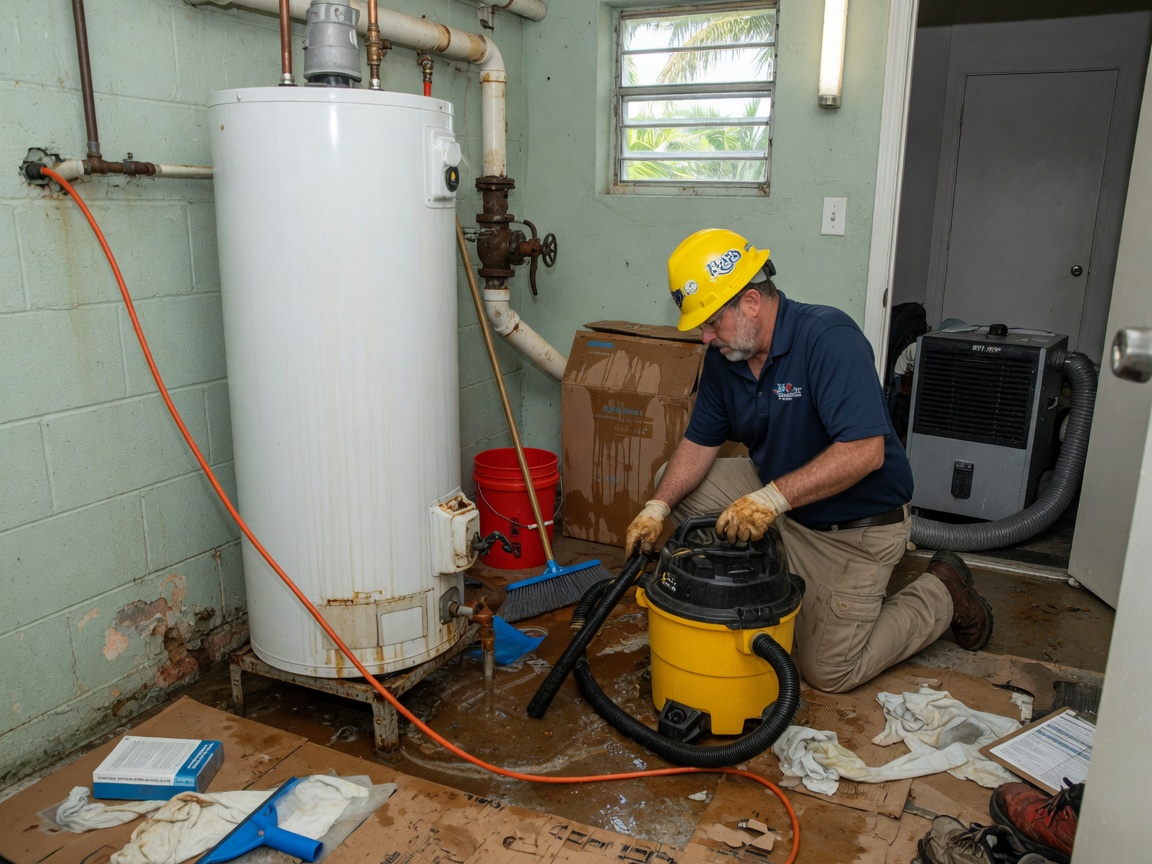
Palma Ceia sits on the Interbay Peninsula with older brick and frame homes built mostly between the 1920s and 1950s. When storm surge pushes water from Tampa Bay across low lots, water often enters through raised foundations and crawl spaces rather than just doorways. Tampa Storm & Flood Response reaches these blocks via Howard Avenue and Swann Avenue day or night to pull water before it soaks into original heart pine floors.
Wet summers bring repeated heavy downpours that overwhelm the neighborhood's flat terrain and older storm drains. Residents near Palma Ceia Park and Plant High School see water pool against garage slabs and low side yards. Crews familiar with these patterns use extraction points along the property lines that avoid disturbing established landscaping and mature oaks common on these streets.
Proximity to Bayshore Boulevard means quick access for equipment but also means surge water can back up from the bay side during high tide events. Local crews know which alleys stay passable and which blocks require longer hose runs from the street.
Around Palma Ceia
We regularly work near:
- 📍Palma Ceia Park
- 📍H.B. Plant High School
- 📍Bayshore Boulevard
- 📍Howard Avenue
- 📍Swann Avenue
Storm Surge Flood Cleanup in Palma Ceia — Local Notes
- •Many Palma Ceia homes sit on narrow lots with limited side access, so equipment must enter through front yards or rear alleys instead of standard driveways.
- •Brick foundations from the 1930s and 1940s often develop hairline cracks that let bay water wick upward during summer storms and hurricane season.
- •Low elevation near the bay means residual moisture stays in crawl spaces longer than in higher parts of South Tampa, requiring extra drying time after extraction.
- •Mature oak roots along Howard Avenue and Swann Avenue can block standard dehumidifier placement, so crews route drying equipment through interior hallways instead.