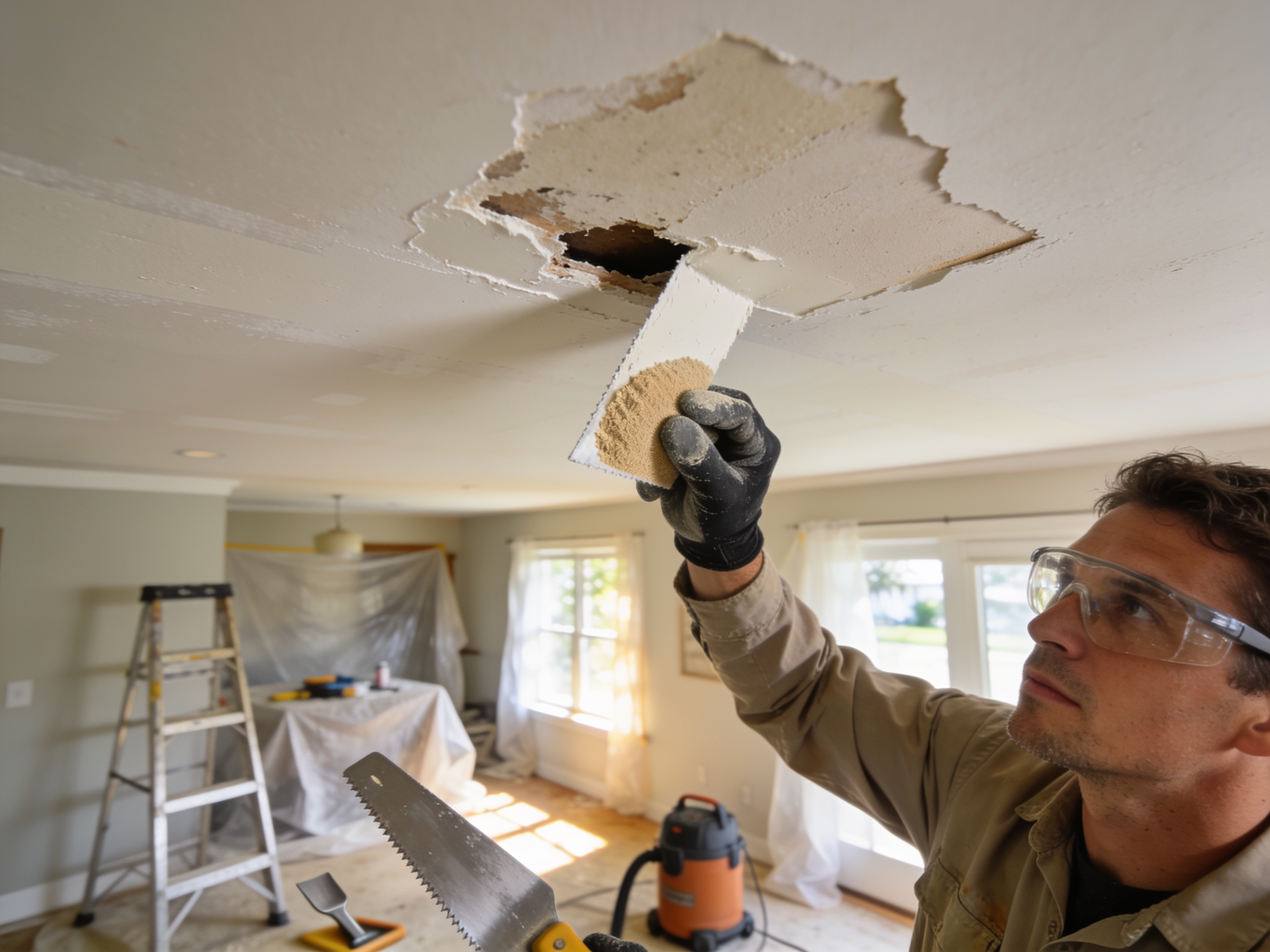
Tampa's humid subtropical climate brings intense summer downpours that often overwhelm older roof decks and flat sections common in Hyde Park and Seminole Heights bungalows built before 1960. When storm surge backs up through Davis Islands or Downtown Tampa drainage, water travels along joists and pools above drywall or plaster ceilings, creating hidden saturation that shows days later as sagging or brown rings. Technicians must open ceilings from above or below while protecting original heart-pine floors and avoiding disruption to knob-and-tube wiring still present in many West Tampa and Ybor City properties.
Hillsborough County building practices require permits for structural ceiling work once more than 25 percent of a surface is removed, especially in flood-prone zones near the Tampa Riverwalk. Moisture meters and infrared scans locate trapped water behind lathe and plaster that modern drywall replacements would miss, preventing recurring mold during the long wet season. Technicians also check attic ventilation in South Tampa ranch homes where poor airflow keeps humidity high enough to re-wet insulation after initial drying.
Storm surge events frequently affect multi-story homes in Davis Islands where upper-floor ceilings leak into lower living spaces. Crews remove affected drywall in sections, treat joists with antimicrobial solutions rated for subtropical conditions, and reinstall with moisture-resistant materials before texture matching. This approach limits secondary damage to nearby electrical runs and HVAC ducts common in these older structures.
Technician insight
In Tampa the thing that catches most people out with Ceiling Water Damage Repair is how quickly water travels along the flat roof decks and parapets common on 1950s-60s homes in Seminole Heights and West Tampa once summer rains exceed two inches an hour. Homeowners often paint over stains without pulling insulation, only to find mold returning during the next wet spell because the joist bays never fully dried in our humidity.
Hyde Park Bungalow After Tropical Downpour
Heavy rain backed up gutters on a 1948 bungalow near Swann Avenue, sending water along ceiling joists into the living room. Infrared scanning showed saturation extending six feet beyond visible stains into the kitchen. Crews opened two ceiling sections, removed wet insulation, dried the joists for three days, then reinstalled moisture-resistant drywall and matched the original texture.
Ceiling Water Damage Repair Services We Offer
✓Drywall Ceiling Replacement
Remove saturated drywall sections and install new moisture-resistant board with proper tape and texture to match existing ceilings in Tampa homes.
✓Plaster Ceiling Restoration
Repair and re-plaster water-damaged ornamental or flat ceilings found in pre-1950s homes in Hyde Park and Ybor City without full demolition.
✓Attic Insulation Removal and Replacement
Extract wet fiberglass or cellulose insulation above ceilings and install new material rated for Hillsborough County humidity levels.
✓Mold Remediation in Ceilings
Contain and remove mold growth behind ceiling surfaces after storm surge leaks, followed by antimicrobial treatment and clearance testing.
✓Ceiling Joist Drying and Treatment
Apply targeted drying to structural joists and treat for rot or insect activity common after prolonged moisture in older Tampa construction.
Ceiling Water Damage Repair Cost in Tampa, FL
| Service | Typical Range | What Affects It |
|---|---|---|
| Initial inspection and moisture mapping | Free | During active storm response calls in Tampa |
| Drywall ceiling section repair (under 100 sq ft) | $450–$850 | Includes removal, drying, and basic texture match |
| Plaster ceiling restoration | $650–$1,200 | Higher for ornamental details in historic Ybor or Hyde Park homes |
| Attic insulation replacement after leak | $300–$700 | Depends on R-value and square footage |
| Full ceiling drying package with equipment | $250–$500 | Daily rate for air movers and dehumidifiers in humid summers |
Ranges are typical for Tampa, FL and confirmed with an exact written quote before any work starts.
How it works
- 1
Inspection And Moisture Mapping
Technicians arrive 24/7 and use infrared cameras plus moisture meters to trace water paths through ceilings in neighborhoods like South Tampa or Brandon.
- 2
Containment And Water Extraction
Set up plastic barriers and remove standing water from above or below the ceiling to stop further migration into living spaces.
- 3
Material Removal And Drying
Cut out damaged drywall or plaster, extract wet insulation, then deploy air movers and dehumidifiers sized for Tampa's high humidity.
- 4
Repair And Finish
Replace or restore ceiling materials, match textures, and apply antimicrobial coatings before final walkthrough with the homeowner.
Pricing
Pricing varies by ceiling size, access difficulty, and whether plaster or multiple layers are involved; upfront written quotes provided before work begins.