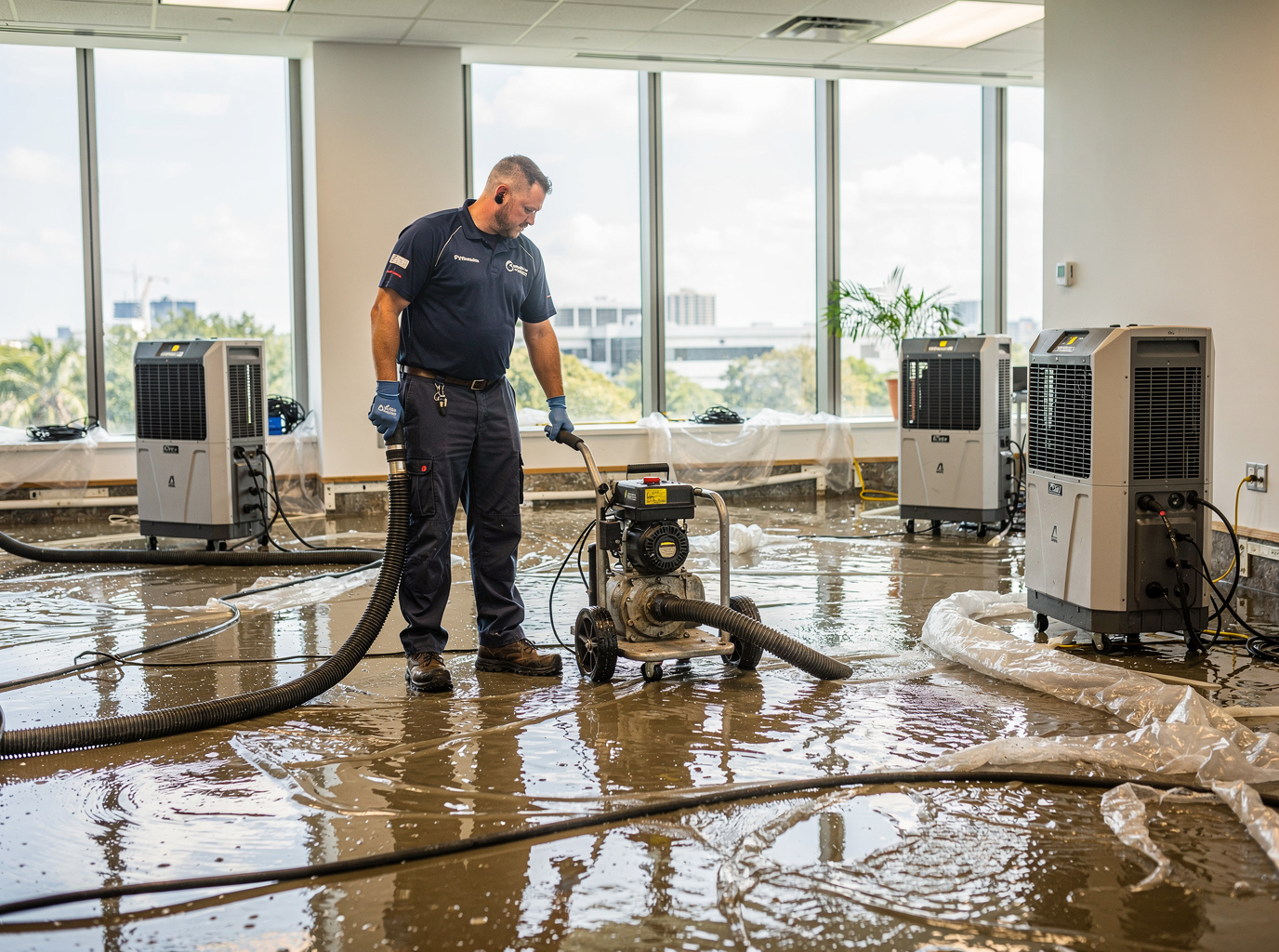
Tampa's humid subtropical climate keeps relative humidity high through wet summers, so commercial water mitigation after storm surge must focus on rapid moisture removal before secondary mold growth sets in. Buildings in Ybor City Historic District and Seminole Heights often feature masonry and older wood framing that trap water differently than newer construction, requiring targeted extraction along baseboards and behind plaster rather than surface drying alone. Storm surge from the bay commonly affects Davis Islands and South Tampa commercial properties first, pushing saltwater into slab foundations and HVAC systems where standard freshwater protocols fall short.
Hillsborough County commercial sites near the Tampa Riverwalk and in West Tampa frequently sit on fill or reclaimed land that channels water toward lower levels during heavy rain events. Mitigation crews must account for this terrain by placing air movers and dehumidifiers in patterns that follow the slope rather than a uniform grid. Failure to address trapped moisture in these soils leads to recurring odor issues weeks after the initial event, especially in retail spaces with vinyl tile or carpet over concrete.
Edge cases include electrical rooms and server closets common in Downtown Tampa offices where even small surge volumes can short circuits and require isolation before drying begins. Commercial mitigation here also means coordinating with property managers to keep partial operations running, using containment barriers that allow foot traffic while maintaining negative pressure in affected zones.
Technician insight
In Tampa, the thing that catches most people out with Commercial Water Mitigation is how the wet summers keep ambient humidity above 70 percent, so even after extraction, older masonry in Ybor City or Seminole Heights keeps releasing moisture for days unless you run high-capacity dehumidifiers longer than you would in drier counties.
Hyde Park Retail After Surge
Storm surge pushed water into a ground-floor retail space near the Tampa Riverwalk. Crews found moisture had wicked up into drywall and under display shelving due to the building's 1970s slab. Extraction and targeted drying prevented mold while allowing the store to reopen within five days.
Commercial Water Mitigation Services We Offer
✓Storm Surge Extraction
Removes standing saltwater from commercial slabs and lower levels in neighborhoods like Davis Islands before corrosion sets in.
✓Masonry Wall Drying
Targets moisture trapped in historic brick and block walls common in Ybor City Historic District and Seminole Heights storefronts.
✓HVAC System Decontamination
Cleans and dries ductwork and units in South Tampa and Hyde Park commercial buildings after surge water enters air handlers.
✓Slab Moisture Mapping
Uses meters to locate hidden water under concrete floors in West Tampa warehouses and retail spaces affected by seasonal flooding.
✓Content Pack-Out and Drying
Removes and restores inventory, fixtures, and equipment from flooded commercial spaces in Brandon and Clearwater-adjacent Tampa sites.
Commercial Water Mitigation Cost in Tampa, FL
| Service | Typical Range | What Affects It |
|---|---|---|
| Initial Commercial Assessment | $250–$450 | Higher when multiple floors or restricted access in historic Ybor buildings |
| Storm Surge Extraction | $800–$2,200 | Varies with square footage and presence of saltwater in low-lying areas like Davis Islands |
| Equipment Drying Package | $1,200–$3,500 | Daily rates scale with number of dehumidifiers needed in humid summer conditions |
| Masonry Wall Mitigation | $600–$1,800 | Extra for older construction in Seminole Heights or Hyde Park |
Ranges are typical for Tampa, FL and confirmed with an exact written quote before any work starts.
How it works
- 1
On-Site Assessment
Technician inspects the property for surge entry points, tests moisture in walls and slabs, and identifies electrical or structural risks specific to the building age.
- 2
Water Removal
Pumps and extraction equipment clear standing water while containing any contaminated runoff to prevent spread into unaffected areas.
- 3
Drying and Monitoring
Air movers and dehumidifiers are positioned based on local humidity levels, with daily readings taken until materials reach acceptable moisture content.
- 4
Final Verification
Post-drying inspection confirms no residual moisture remains in hidden cavities before returning the space to the owner.
Pricing
Upfront quotes after inspection; final cost depends on water volume, building age, and access constraints.