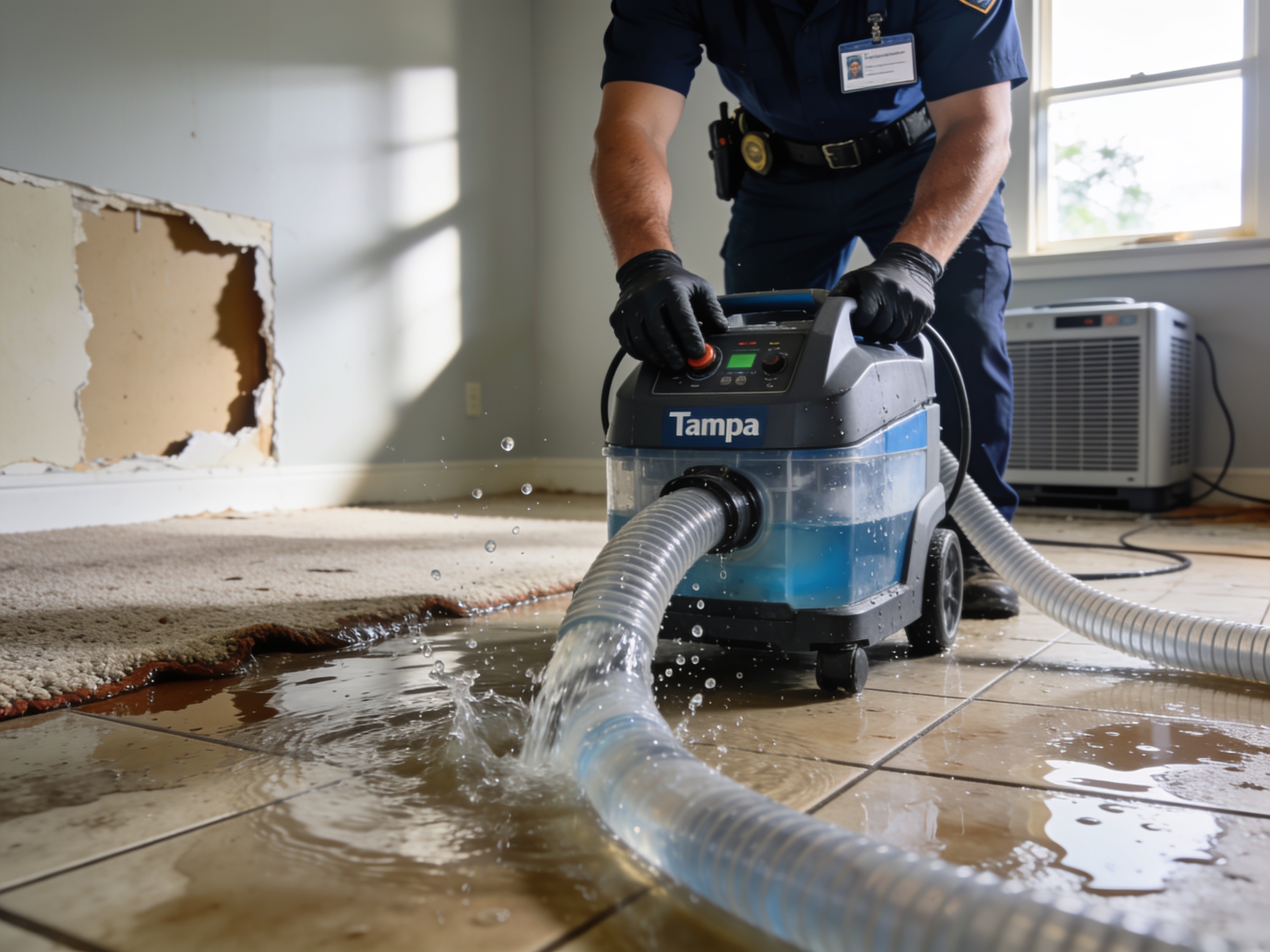
Tampa's humid subtropical climate brings heavy summer rains that combine with storm surge to push saltwater into low-lying neighborhoods like Davis Islands and South Tampa. Older housing stock in Ybor City Historic District and Seminole Heights often features raised foundations or crawl spaces that trap water against pier-and-beam construction, requiring extraction equipment that can reach under floors without disturbing historic materials. In these areas, porous limestone soils and a high water table mean residual moisture can migrate back into slabs within hours if pumps do not maintain negative pressure during removal.
West Tampa and Hyde Park bungalows built before 1960 frequently have plaster walls and heart-pine subfloors that absorb surge water quickly, leading to hidden saturation behind baseboards. Extraction crews must cut strategic weep holes and use moisture meters calibrated for Florida humidity to avoid leaving pockets that later support mold. Proximity to Tampa Bay also means salinity levels in the water accelerate corrosion on metal HVAC components and electrical boxes, so extraction includes isolating these systems before pumps start.
When surge reaches properties near the Tampa Riverwalk or Lowry Park Zoo, crews coordinate with Hillsborough County drainage patterns because water often backflows from overwhelmed storm sewers. This changes the job from simple pumping to managing ongoing inflow while protecting neighboring homes in Brandon or Clearwater that share the same watershed. Extraction stops only after infrared scans confirm moisture readings drop below 15 percent in affected materials.
Technician insight
In Tampa, the thing that catches most people out with Emergency Water Extraction is how quickly the high water table in Seminole Heights and near the river lets saltwater migrate back under slabs after pumps stop, especially when summer rains keep feeding the system.
Davis Islands Surge Infiltration
Storm surge pushed several inches of bay water under a 1950s home near the Tampa Riverwalk. Extraction crews found ongoing backflow from the street drain and used continuous pumping with barriers to protect the neighboring property. Once readings stabilized, drying began without further migration into the plaster walls.
Emergency Water Extraction Services We Offer
✓Storm Surge Standing Water Removal
High-volume pumps extract saltwater floodwater from yards and interiors in Davis Islands and South Tampa before it seeps into foundations.
✓Crawl Space Water Extraction
Targeted pumping and dehumidification clears trapped moisture under older homes in Seminole Heights and Ybor City without disturbing historic framing.
✓Slab Leak Flood Recovery
Immediate removal of water that has migrated under concrete slabs common in West Tampa and Hyde Park bungalows to prevent long-term structural weakening.
✓Basement and Garage Pumping
Rapid clearing of below-grade spaces in Downtown Tampa and near the Tampa Riverwalk where storm drains back up during surge events.
✓Post-Surge Debris and Water Extraction
Combined removal of flood debris and standing water from properties affected by overflow from Tampa Bay into neighborhoods like Davis Islands.
Emergency Water Extraction Cost in Tampa, FL
| Service | Typical Range | What Affects It |
|---|---|---|
| Initial Site Visit And Assessment | Free | Always included for storm surge calls in Tampa |
| Emergency Water Extraction | $450–$1,200 | Varies by gallons removed and access difficulty in older homes |
| Crawl Space Or Slab Extraction Add-On | $300–$750 | Required for many Seminole Heights and Hyde Park properties |
| Saline Water Disposal Fee | $150–$400 | Applies when surge water must be hauled rather than discharged locally |
Ranges are typical for Tampa, FL and confirmed with an exact written quote before any work starts.
How it works
- 1
On-Site Assessment
Technicians arrive within hours, map water depth, test salinity, and identify hidden saturation in older Tampa housing stock.
- 2
Containment And Isolation
Barriers protect unaffected rooms while electrical and HVAC systems are isolated to prevent corrosion from saltwater.
- 3
High-Volume Extraction
Truck-mounted and submersible pumps remove bulk water while maintaining negative pressure in crawl spaces and under slabs.
- 4
Moisture Verification
Infrared and probe readings confirm extraction is complete before drying equipment is staged in Hillsborough County homes.
Pricing
Costs depend on water depth, square footage, and whether saltwater requires specialized disposal.