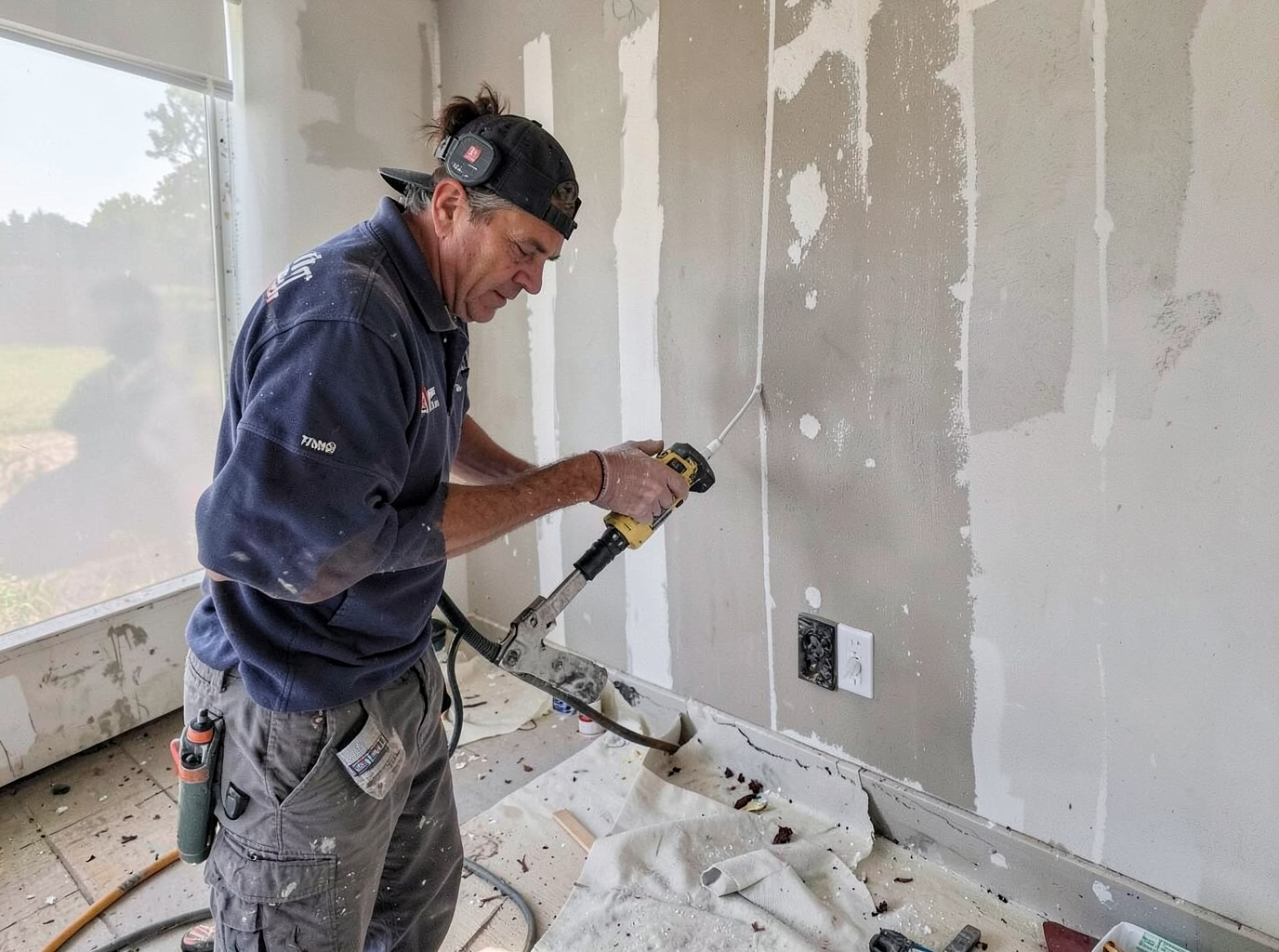
Tampa's wet summers and frequent storm surge push water into wall cavities in older homes across Seminole Heights and Ybor City Historic District, where lath-and-plaster transitions to drywall create hidden saturation points. Once moisture lingers past 48 hours in the county's high-humidity air, mold colonies form behind baseboards and electrical outlets faster than in drier climates. Technicians map moisture with infrared cameras before cutting out only the damaged sections, preserving sound material in Davis Islands and Hyde Park bungalows that often feature narrow wall cavities.
Storm surge from the Hillsborough River or Tampa Bay commonly carries sediment that embeds in drywall paper facing, requiring full removal rather than surface drying alone. In West Tampa and Downtown Tampa high-rises, we coordinate with building management on load-bearing considerations and permit requirements for interior wall work. Replacement uses moisture-resistant board in lower courses where repeat flooding risk exists, finished to match existing textures common in 1950s–1970s stock.
Nearby cities like Brandon and St. Petersburg see similar surge patterns, but Tampa's flat terrain and clay-heavy soils slow drainage, extending drying times. We run commercial dehumidifiers and air movers for days after extraction, checking readings daily until levels match unaffected areas. Homeowners in South Tampa often overlook insulation behind drywall that must be replaced to avoid future odor issues.
Final finishing includes skim-coating and priming with mold-inhibiting products suited to the region's constant moisture load. All work follows Hillsborough County building practices for flood-prone zones without claiming unverified credentials.
Technician insight
In Tampa the thing that catches most people out with Drywall Water Damage Repair is how quickly the humid subtropical air lets mold take hold behind baseboards after even modest storm surge in flat neighborhoods like Seminole Heights. Older housing stock often has narrow cavities that trap sediment from the bay, so you cannot just dry the surface. Skipping full insulation removal almost always leads to callbacks once the wet summers return.
Hyde Park Bungalow After Bay Surge
Storm surge pushed water 14 inches up the walls of a 1960s Hyde Park home. We found saturated drywall paper and insulation extending two feet higher than the visible line due to wicking. After mapping and removing only the affected sections, we dried the cavities over four days and replaced with moisture-resistant board before the next wet season.
Drywall Water Damage Repair Services We Offer
✓Moisture Mapping and Assessment
Infrared scanning and pin-meter readings locate hidden saturation in Tampa wall cavities before any cutting begins.
✓Affected Drywall Removal
Precise cuts remove only water-damaged sections in older Seminole Heights and Ybor City homes while protecting adjacent sound material.
✓Insulation and Cavity Drying
Removal of saturated insulation followed by targeted drying to address Tampa's humid subtropical air that slows evaporation.
✓Mold-Inhibiting Drywall Replacement
Installation of moisture-resistant board in lower wall sections common after storm surge in Davis Islands and South Tampa.
✓Texture and Paint Matching
Skim coat and finish work to blend repairs with original surfaces found in Hyde Park and West Tampa properties.
Drywall Water Damage Repair Cost in Tampa, FL
| Service | Typical Range | What Affects It |
|---|---|---|
| Drywall Removal And Disposal | $3–$7 per sq ft | Higher in older Ybor City homes with plaster transitions or tight access. |
| Full Wall Cavity Drying | $800–$2,200 | Depends on number of rooms and duration needed in humid Tampa summers. |
| Drywall Replacement And Finish | $5–$12 per sq ft | Includes tape, texture, and prime; varies by height and matching complexity. |
| Insulation Replacement | $1.50–$4 per sq ft | Required after surge flooding in South Tampa and Davis Islands properties. |
Ranges are typical for Tampa, FL and confirmed with an exact written quote before any work starts.
How it works
- 1
On-Site Inspection
Technician documents water height, checks multiple rooms, and records readings in the specific Tampa neighborhood.
- 2
Water Extraction And Containment
Remove standing water and set containment to limit spread into unaffected areas of the home.
- 3
Drywall Removal And Cavity Prep
Cut out damaged sections, discard wet insulation, and prepare cavities for drying equipment.
- 4
Drying And Monitoring
Run dehumidifiers and fans while tracking moisture levels until readings stabilize across Hillsborough County homes.
- 5
Repair And Finish
Install new drywall, tape, texture, and prime to restore the wall surface.
Pricing
Upfront quotes after inspection reflect square footage, wall height, and whether insulation or multiple rooms require work.