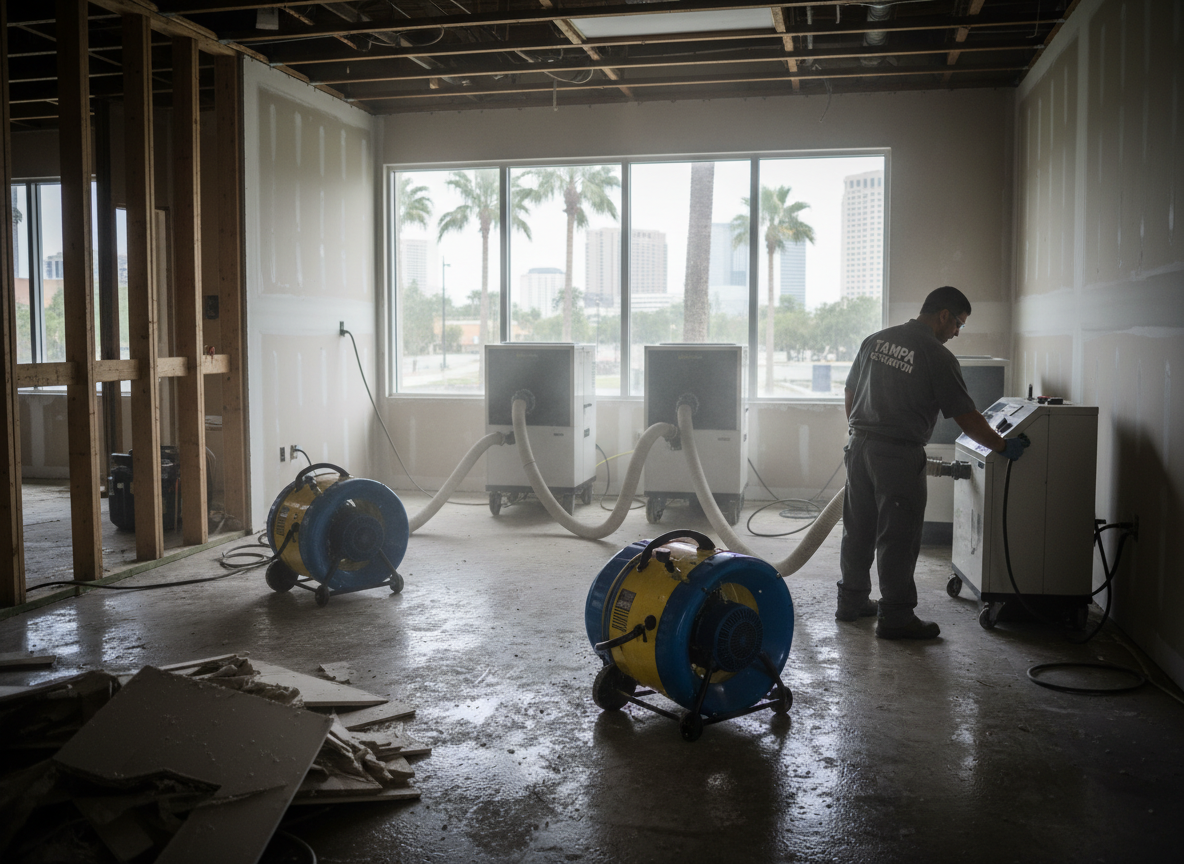
Tampa's humid subtropical climate keeps relative humidity high through summer, so storm surge water that reaches crawl spaces or slab edges in low-lying neighborhoods like Davis Islands and South Tampa evaporates slowly without mechanical intervention. Older homes in Seminole Heights and Ybor City often have plaster over lath or balloon-framed walls that trap moisture behind baseboards and in interstitial cavities. Industrial dehumidifiers rated for 70-plus pints per day combined with high-velocity air movers must run continuously for several days to pull moisture below 12 percent on a meter before finishes can be reinstalled.
Floodwater from the Hillsborough River or Tampa Bay frequently carries silt that settles into hardwood floors and subfloor seams in Hyde Park and Downtown Tampa properties. Simply running fans without proper extraction leaves this sediment to wick upward, causing cupping or delamination weeks later. Technicians map moisture with penetrating and non-penetrating meters at multiple depths, then place equipment in patterns that force air through every affected cavity while maintaining negative pressure to prevent migration into unaffected rooms.
West Tampa and Brandon homes built on fill dirt can experience capillary rise after prolonged rain, so drying plans include drilling small weep holes at the base of exterior walls when slab moisture readings stay elevated. Failure to address this leads to recurring musty odors even after surface water is gone. Daily monitoring logs track temperature, humidity, and moisture content until readings stabilize, at which point equipment is removed and the space is cleared for reconstruction.
Technician insight
In Tampa the thing that catches most people out with structural drying is how quickly high summer humidity re-wets surfaces once equipment is pulled too soon. Older balloon-framed homes in Seminole Heights and Ybor City hold moisture behind plaster for weeks longer than newer slab-on-grade builds in Brandon, so we always leave meters in place and check readings twice after shutdown before signing off.
Hyde Park Bungalow After Bay Surge
Storm surge pushed several inches of water under a 1920s bungalow near the Tampa Riverwalk. Moisture had wicked into oak floors and up plaster walls. We mapped readings, extracted water, then ran dehumidifiers and air movers through cavities for six days until every wall and subfloor tested dry. The homeowner avoided mold growth and full floor replacement.
Structural Drying and Dehumidification Services We Offer
✓Moisture Mapping and Assessment
Pinpoint hidden water in walls, floors and ceilings using calibrated meters so drying focuses only on affected materials in Tampa homes.
✓Industrial Dehumidifier Placement
Position high-capacity units sized for Tampa humidity loads to pull moisture from air and building assemblies after storm surge events.
✓Cavity and Wall Drying
Inject air into stud bays and behind baseboards in older Ybor City and Seminole Heights homes where plaster and lath trap water.
✓Hardwood Floor Drying
Use specialized mats and directed airflow to dry oak and pine floors common in Hyde Park and South Tampa without cupping or buckling.
✓Post-Drying Verification
Retest all surfaces and cavities to confirm moisture levels meet industry standards before reconstruction begins in Hillsborough County properties.
Structural Drying and Dehumidification Cost in Tampa, FL
| Service | Typical Range | What Affects It |
|---|---|---|
| Single-room drying package | $650–$1,200 | Includes equipment for 3–5 days; larger rooms or multiple cavities increase cost. |
| Whole-home structural drying | $2,800–$5,500 | Common after storm surge in low-lying areas; depends on number of affected levels. |
| Cavity and wall drying add-on | $400–$900 | Required for older plaster homes in Ybor City or Seminole Heights. |
| Daily equipment rental extension | $150–$300 per day | Added when humidity slows drying beyond initial estimate. |
Ranges are typical for Tampa, FL and confirmed with an exact written quote before any work starts.
How it works
- 1
Site Assessment
Technicians inspect affected rooms, record moisture readings at multiple depths, and identify hidden water paths created by Tampa storm surge.
- 2
Water Extraction
Remove standing water and saturated debris from floors and cavities before equipment placement in neighborhoods like Davis Islands.
- 3
Equipment Setup
Position air movers and dehumidifiers in patterns that force dry air through every wet assembly while exhausting moist air outside.
- 4
Daily Monitoring
Return each day to adjust equipment, log readings, and confirm drying progress until moisture content stabilizes across the structure.
- 5
Final Clearance
Verify all materials are dry, remove equipment, and document conditions for insurance and reconstruction teams.
Pricing
Pricing varies by square footage affected, depth of water intrusion, and number of days equipment must run in Tampa's humid conditions.